Traditional Vs Professional Book Publisher USA: Best for New Authors?
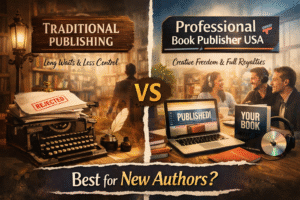
Choosing how to publish a book can feel a lot like standing at a crossroads. One path is lined with legacy prestige and long timelines, the other with modern flexibility and real creative control. Many first-time authors find themselves wondering which road will lead to a stronger writing career. And right in the middle of that choice sits the big debate: Traditional vs. a Professional Book Publisher USA — which one actually serves new authors better?
Before diving deep into the comparison, here’s something worth exploring. Many writers looking for an accessible, guided publishing journey often lean toward a Professional Book Publisher USA, simply because the process is clearer, faster, and far more author-friendly.
Let’s unpack the differences in a way that feels human, honest, and genuinely useful.
Understanding Modern Book Publishing Options in the USA
The publishing world isn’t the single-route industry it once was. New authors today face a landscape filled with choices — some empowering, some confusing, and some that look friendlier than they actually are. Before choosing a direction, it helps to understand how these paths operate and what new authors can realistically expect from each.
Traditional Publishing for First-Time Authors
Traditional publishing carries a certain nostalgic charm — the kind that makes writers imagine polished offices, big city editors, and a launch day filled with media headlines. But beneath the glamor lies a maze of gatekeepers and timelines that often test a new author’s patience. Manuscript acceptance rates are low, rejections are common, and decisions move slower than most people expect.
Professional Book Publisher USA Services Explained
On the other hand, professional publishing services offer a more collaborative experience. Instead of waiting months to hear from an agent, authors work directly with industry experts who guide them through writing, editing, design, distribution, and marketing. It’s a hands-on partnership, not a distant approval process.
Comparing Publishing Timelines for New Authors
If there’s one thing that surprises writers the most, it’s how differently each publishing method treats time. Every author dreams of holding their finished book — but the journey to get there varies drastically.
Speed of Traditional Publishing for New Writers
Traditional publishers move with caution and structure. Manuscripts go through multiple rounds of internal evaluation, and even after acceptance, production cycles can stretch anywhere from 12 to 24 months. That delay often feels endless, particularly for authors eager to launch their writing career.
Faster Production with a Professional Book Publisher USA
Professional publishing services prioritize efficiency without sacrificing quality. Because the process is guided by your chosen team rather than a corporate hierarchy, books often reach completion within a few weeks to a few months. For new authors trying to build momentum, that difference can be game-changing.
Creative Control: Who Holds the Steering Wheel?
One of the most emotional parts of publishing is how much of your voice stays intact. A book is personal — an extension of your experiences, imagination, and message. How that message appears on shelves depends on how much control you’re allowed.
Your Voice in Traditional Publishing
Traditional publishers often focus on market trends, not personal vision. Editors may request significant changes to plotlines, tone, structure, or character arcs. Book covers are usually chosen by the publishing team, not the author. While these adjustments aim to improve sales, they sometimes dilute the original heart of the story.
Creative Freedom with Professional Book Publisher USA Experts
Professional book publishing services operate like creative partners. Authors have the final say over their book’s direction — from the manuscript’s tone to the visual design of the cover. Instead of being told what must change, writers are guided through suggestions that support their vision. It’s the difference between being directed and being supported.
Custom Book Design and Author Branding Options
One of the biggest advantages here is the ability to build a personal brand. Professional publishers often help new authors create a consistent voice, strong bio, cohesive typography, and marketing visuals that reflect the tone of the book. These elements are rarely prioritized by large traditional houses.
Genre-Specific Editing and Personalized Story Development
Another benefit is having editors who specialize in your exact genre. Whether it’s memoir, business, romance, thriller, or self-help, expert editors shape your manuscript to strengthen clarity, tension, transitions, and emotional rhythm — without stripping away your style. This kind of specialized attention is rarely available in traditional publishing.
Money Matters: Costs, Royalties & Long-Term Earnings
If creative control is the heart of publishing, then finances are the backbone. How much you earn and who controls the profits often determines which path authors ultimately choose.
Upfront Costs vs. Royalties in Traditional Deals
At first glance, traditional publishing seems financially appealing — they don’t charge you upfront. But that comes with a trade-off: authors typically earn 10% or less in royalties. The publisher owns most rights and collects the larger share of every sale. For new authors hoping to build income, this model can feel restrictive.
Ownership, Profit, and Transparency with a Professional Book Publisher USA
Professional publishers take a different approach. Authors pay for services — whether writing, editing, design, or publishing — but they keep full rights to their book. This means 100% royalties, lifetime creative ownership, and complete control over pricing. For authors with long-term plans, this structure offers far more financial freedom.
Royalty Retention and Distribution Benefits
Keeping your royalties doesn’t just mean earning more money. It means you can update your book, launch new editions, or release foreign versions without permission from anyone else. Your book remains yours — forever.
Long-Term Author Growth and Consistent Revenue Streams
Professional publishers also help authors create multiple revenue channels. Audiobooks, paperbacks, ebooks, translations, special editions, and even writer-brand partnerships become easier when you control your book rights. This turns writing from a one-time achievement into a long-term career path.
Which Is Truly Best for New Authors?
Both options have their strengths. Traditional publishing brings prestige, industry validation, and the possibility of major distribution channels. But it also comes with long waiting periods, limited control, and lower earnings.
Professional publishing, on the other hand, offers new authors something that traditional paths rarely provide: speed, transparency, creative freedom, and ownership. For today’s writers — especially those trying to build visibility, momentum, and personal brand identity — that combination is incredibly powerful.
If your goal is to get published quickly, maintain control of your story, build strong author branding, and keep your royalties, then a Professional Book Publisher USA is likely the better fit.
And if your dream is to establish your voice without waiting for industry approval, the modern publishing route gives you the freedom to do exactly that.
