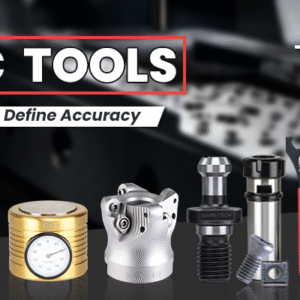
Carbide Drill in CNC Machining: Features, Advantages, and Limits
CNC machining demands high accuracy, consistent performance, and tools that can withstand extreme cutting conditions. As materials become harder and tolerances tighter, conventional drilling solutions often struggle to deliver reliable results. This has led manufacturers to adopt advanced cutting technologies that offer greater stability and efficiency. One such solution is the carbide drill, which has become a standard choice in modern CNC environments due to its strength, precision, and durability.
Role of Drilling Tools in CNC Machining
Drilling is one of the most common operations in CNC machining, yet it directly affects dimensional accuracy, surface finish, and production efficiency. Any inconsistency in hole size or alignment can lead to assembly issues and costly rework.
Modern CNC machines operate at high speeds and feeds, which places significant stress on cutting tools. Drilling tools must maintain edge integrity, resist heat, and evacuate chips efficiently. Carbide tooling has emerged as a solution that meets these demands across a wide range of materials and applications.
Key Features of Carbide Drilling Tools
The performance of carbide-based drilling tools is rooted in their material composition and engineered design.
Material Composition
Carbide tools are produced from tungsten carbide particles bonded with cobalt. This structure provides exceptional hardness and compressive strength, making the tool resistant to wear even when machining abrasive materials.
Rigid Tool Construction
Solid carbide drill bits are manufactured from a single piece of material, eliminating joints or weak points. This rigidity reduces tool deflection and helps maintain consistent hole geometry, especially during deep drilling operations.
Advanced Tool Geometry
Modern carbide drill bits feature optimized point angles, flute designs, and cutting edges. These design elements improve cutting efficiency, reduce thrust force, and enhance chip evacuation during CNC operations.
Compatibility with High-Speed Machining
Carbide tooling maintains its hardness at elevated temperatures, allowing CNC machines to operate at higher spindle speeds without compromising tool performance.
Advantages in CNC Machining Applications
The adoption of a carbide drill in CNC machining offers several operational and economic advantages.
Superior Accuracy and Repeatability
Due to their rigidity and wear resistance, carbide tools produce consistent hole sizes over long production runs. This repeatability is critical in industries where precision is non-negotiable.
Extended Tool Life
Compared to high-speed steel tools, carbide options last significantly longer when machining hard or abrasive materials. Reduced tool wear leads to fewer tool changes and less machine downtime.
High Productivity
Carbide drill bits allow higher cutting speeds and feed rates, directly improving cycle times. Faster machining without sacrificing accuracy enhances overall shop productivity.
Versatility Across Materials
Carbide tools perform well on a wide range of materials, including alloy steel, stainless steel, cast iron, and non-ferrous metals. This versatility reduces the need for multiple tool types.
Importance of Tool Size and Micro-Drilling
In CNC machining, tool size selection directly impacts accuracy and surface finish. Micro-drilling applications require tools that can maintain stability at very small diameters.
A 1mm carbide drill bit is commonly used in electronics, medical components, and precision engineering. Carbide’s rigidity makes it ideal for such applications, as it minimizes bending and ensures clean hole formation even at micro scales.
Cost Considerations and Tool Value
One common concern among manufacturers is carbide drill bits price. Carbide tools generally have a higher upfront cost compared to traditional drilling tools. However, evaluating cost based solely on purchase price can be misleading.
When considering total cost of ownership, carbide tools often prove more economical due to:
- Longer service life
- Reduced machine downtime
- Higher production efficiency
- Lower scrap and rework rates
For high-volume CNC operations, these factors significantly outweigh the initial investment.
Performance in Automated CNC Environments
CNC machining relies on automation and consistency. Tools must perform reliably across unattended or lights-out production cycles.
A well-designed carbide drill offers the stability required for automated machining, reducing the risk of tool breakage and dimensional drift. Consistent cutting performance ensures predictable results, which is essential for quality control and process optimization.
Limitations of Carbide Drilling Tools
Despite their many advantages, carbide tools are not without limitations.
Brittleness
Carbide is harder but more brittle than steel. Improper handling, incorrect cutting parameters, or sudden impact can cause chipping or breakage.
Sensitivity to Setup
Accurate tool alignment and rigid machine setup are critical. Excessive runout or vibration can negatively affect tool life and hole quality.
Higher Initial Cost
While carbide tools offer long-term value, the higher upfront cost may be a consideration for small workshops or low-volume applications.
Limited Forgiveness
Unlike tougher materials, carbide does not tolerate mistakes well. Incorrect feeds, speeds, or coolant application can quickly damage the cutting edge.
Understanding these limitations helps machinists use carbide tooling effectively and avoid unnecessary tool failures.
Best Practices for Maximizing Tool Performance
To get the most out of carbide drill bits in CNC machining:
- Use recommended cutting speeds and feeds
- Ensure proper tool holding and minimal runout
- Apply suitable coolant or lubrication
- Inspect tools regularly for wear or damage
Following best practices extends tool life and maintains machining accuracy.
Applications Across Industries
Carbide drilling tools are widely used in industries such as:
- Automotive manufacturing
- Aerospace engineering
- Medical device production
- General precision engineering
Their ability to maintain accuracy under demanding conditions makes them a preferred choice for critical CNC operations.
Conclusion
In modern CNC machining, tool performance directly influences productivity and product quality. The carbide drill stands out due to its exceptional hardness, thermal stability, and precision capabilities. While it requires careful handling and proper setup, its advantages in speed, accuracy, and tool life make it an essential solution for demanding applications.
About Jaibros:
Jaibros is a trusted supplier of high-quality industrial cutting tools, offering reliable carbide drilling solutions designed to meet the precision requirements of modern CNC machining.
FAQs
1. Why are carbide drill bits preferred in CNC machining?
They provide higher accuracy, longer tool life, and better performance at high speeds compared to conventional tools.
- Are solid carbide drill bits suitable for hard materials?
Yes, they are ideal for machining hard and abrasive materials due to their rigidity and wear resistance.
3. How should I evaluate carbide drill bits price?
Consider tool life, productivity gains, and reduced downtime rather than just the initial cost.
- Can a 1mm carbide drill bit be used in CNC machines?
Yes, carbide’s stiffness makes it suitable for micro-drilling applications requiring high precision.
- What are the main limitations of carbide drilling tools?
They are more brittle, require precise setup, and have a higher upfront cost than steel tools.